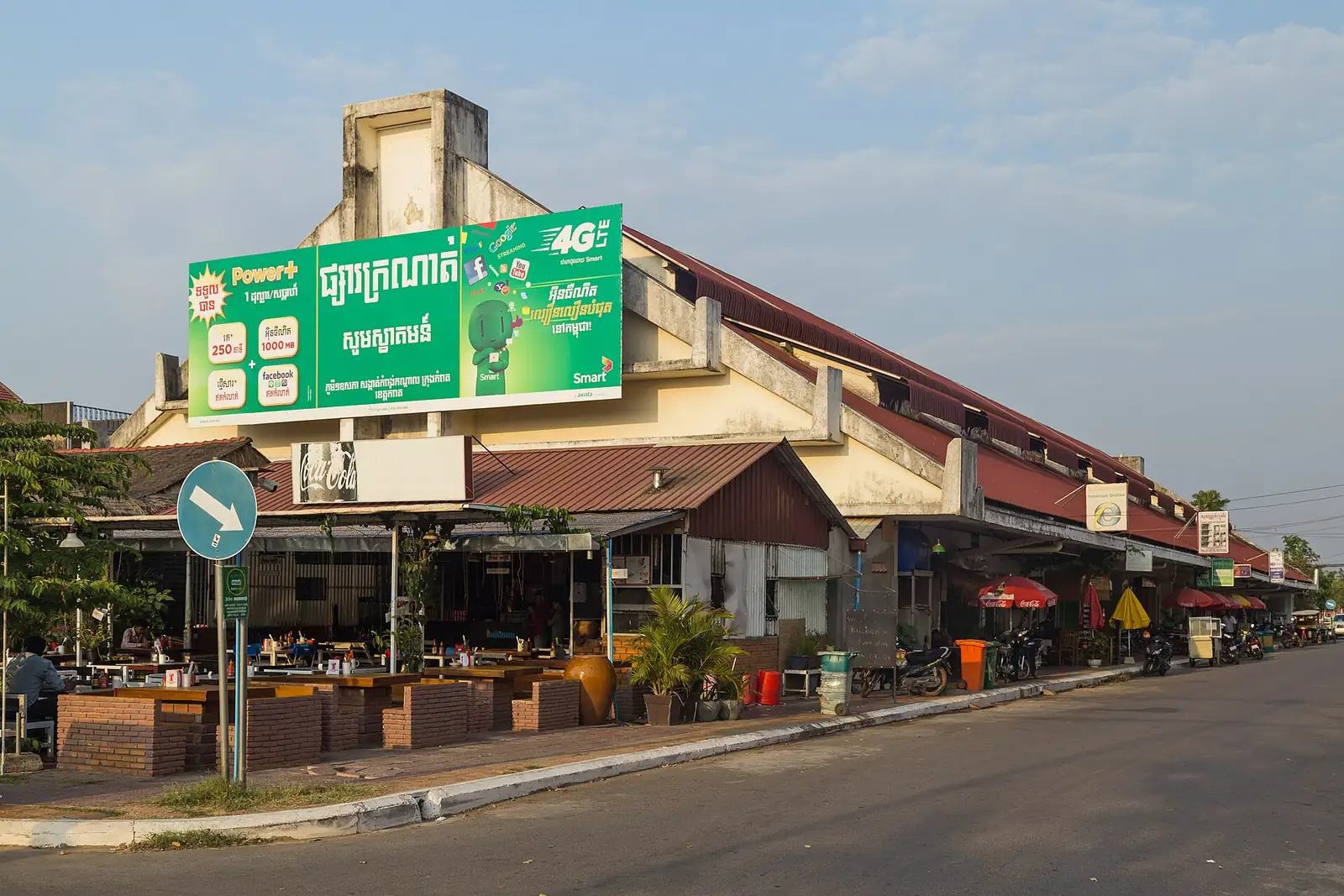
Which market for what
Most visitors searching for a Kampot market want one of four things, and each has its own place.
- Everyday food, fabric and household goods: the Central Market, Phsar Samaki, in the middle of town.
- Fish and seafood: the old fish market building by the river, plus the seafood section inside the Central Market.
- An evening meal and a browse: the Night Market and the newer food street.
- Crab cooked to order: the crab market in Kep, a short trip along the coast.
If you only have time for one, make it the Central Market in the early morning.
Central Market (Phsar Samaki)
Phsar Samaki is the main shopping place in Kampot and the easiest to find, since it sits right in the middle of town. It is a working market first and a sight second, which is exactly why it is worth walking through.
Food. Fruit stalls come first, with mangoes, mangosteens and Kampot durian, much of it from nearby farms. Further in you reach the seafood area (fish, crabs, shrimp), then rows of meat and poultry. The spice section is a good place to look for Kampot pepper. Small stalls inside sell noodle soup and sweet desserts at low prices.
Everything else. Large parts of the building are given over to fabric and clothing: cotton scarves, long skirts, shoes, hats and travel bags. Jewellery and handicraft stalls sell gold, silver and handmade items that work as gifts. Household goods run from cooking pots to handmade brooms. There is also a traditional medicine area with roots, dried herbs and natural oils used in Khmer healing, and massage services are often found nearby.
Hours. The market starts around 6:00 AM, and that is when it is busiest, with cooks and families buying ingredients. It gets much quieter in the afternoon and most vendors begin closing by about 5:00 PM.
The old fish market and buying seafood
The old Fish Market is a colonial-era building beside the river, associated with the town's fish trade. It is best treated as a landmark of the waterfront and a piece of Kampot's architecture. Do not rely on it for a fixed schedule or a particular set of stalls; ask locally about what is currently operating there.
For buying seafood in practice, the reliable option is the seafood section of the Central Market, where fish, crabs and shrimp are sold alongside the meat and poultry. Kampot's position near the coast and on the river means the supply is local. Go early for the best choice, and expect wet floors.
Night Market and food street
The Night Market is the evening counterpart to the Central Market. It has Khmer dishes such as fish amok and coconut desserts, plus street food including grilled meats and fresh fruit. Stalls also sell handicrafts, souvenirs, clothing, household items and local specialities such as Kampot pepper. Haggling is normal. Entertainment is part of the mix, with live music and traditional dance mentioned for some nights, along with massage and yoga activities. Programmes vary, so treat these as possibilities rather than promises.
It is close enough to reach on foot or by bicycle from most of the centre, and tuk-tuks or taxis from hotels and guesthouses are easy to find.
A newer, permanent food street has been built in the central garden area of the city market. It is described as stone-built in a traditional Khmer style, with a roof against sun and rain, drainage, bright lighting for night visits, and vendors in traditional Khmer dress. Dishes mentioned include pepper crab with fresh green pepper, lemongrass-and-honey skewers, palm curry with durian, seaweed salad and fresh rice noodles made at the stall. Before it opened, street food was mostly along the riverfront.
Kep crab market
Kep is a seaside town on the southern coast, and its crab market is the main reason many people visit. The usual routine is simple. Vendors offer you fresh crabs, you buy them, and the market's cooks prepare them for you, for around $2 per bag. The crabs are cut into quarters, seasoned with Kampot pepper and cooked while you watch.
Pepper is the local twist: Kampot pepper is what ties the two towns together on the plate. Kep also has a beach, a national park and the blue crab statue, which can fill out the day.
Practical tips
- Wear closed or sturdy shoes. Floors in the fish and meat areas are often wet.
- Carry small notes. Vendors generally prefer Cambodian riel or small US dollar bills.
- Be polite and smile; it helps when negotiating.
- Arrive before about 8:00 AM for the Central Market atmosphere, and after dark for the Night Market.
- Check fish prices at more than one stall, and agree the price before cooking at Kep.
Questions people ask
What time does the Kampot Central Market open?
Around 6:00 AM. It is busiest in the early morning and quiet by the afternoon, with most vendors closing about 5:00 PM.
Where can I buy fresh seafood in Kampot?
The seafood section of the Central Market (Phsar Samaki) sells fish, crabs and shrimp. The old fish market building on the riverside is linked to the town's fish trade, but check locally what is operating there.
Can I buy Kampot pepper at the market?
Yes. The Central Market has a spice section where Kampot pepper is sold, and the Night Market also has stalls selling it.
How does the Kep crab market work?
You buy fresh crabs from vendors, and the market cooks prepare them for about $2 per bag, cutting them into quarters and seasoning them with Kampot pepper.
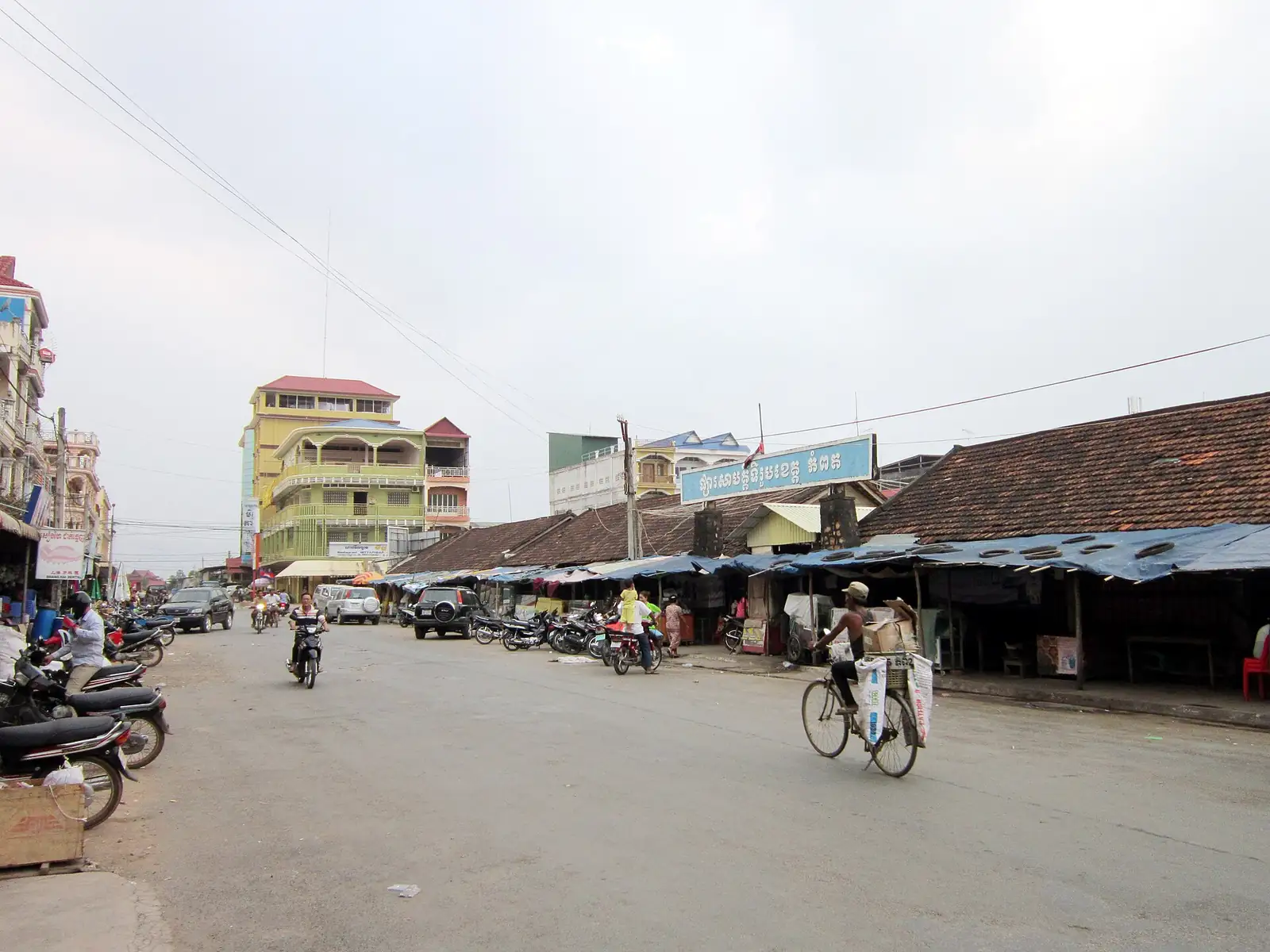 Phsar Samaki
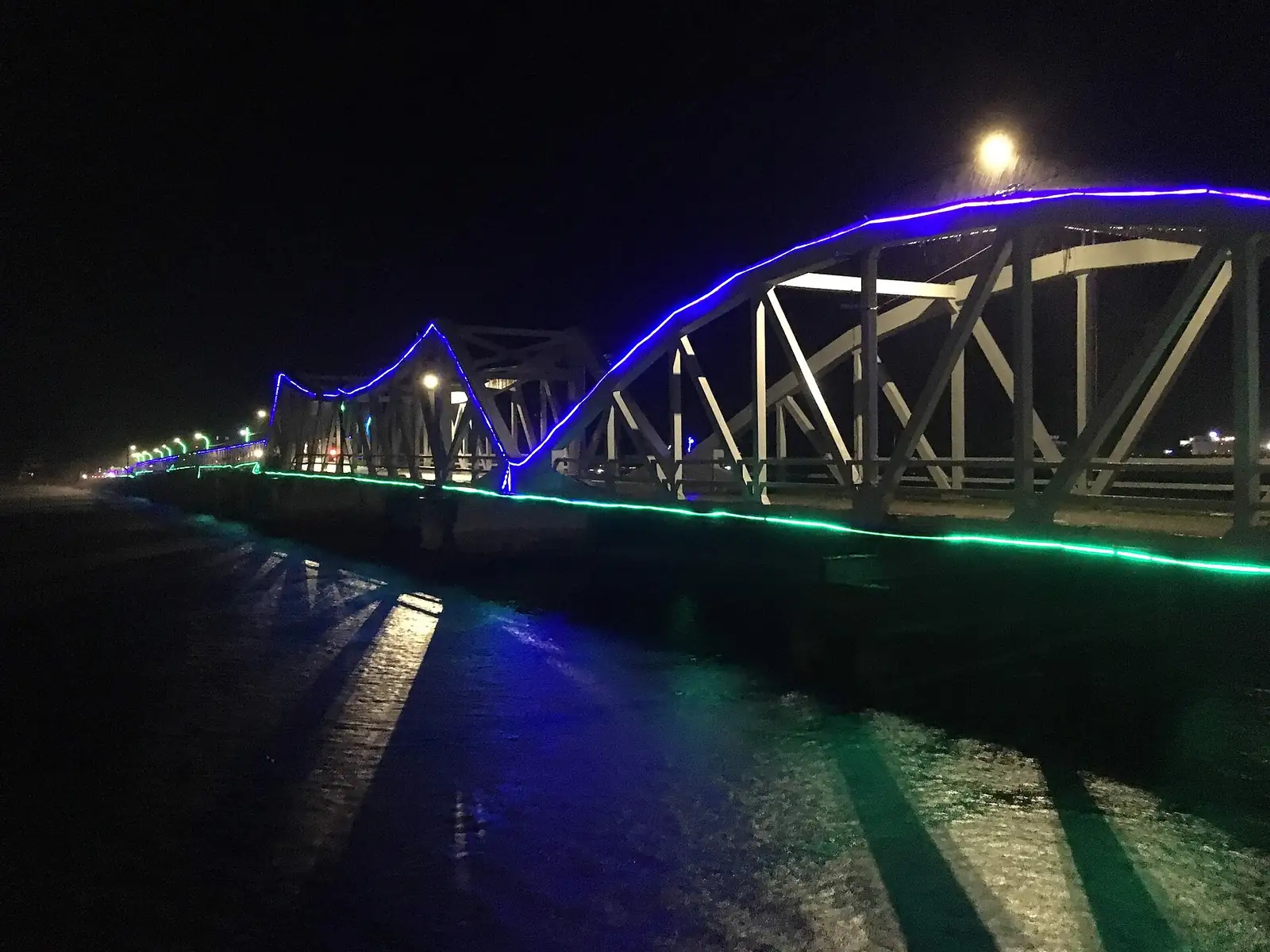 Kampot Night Market
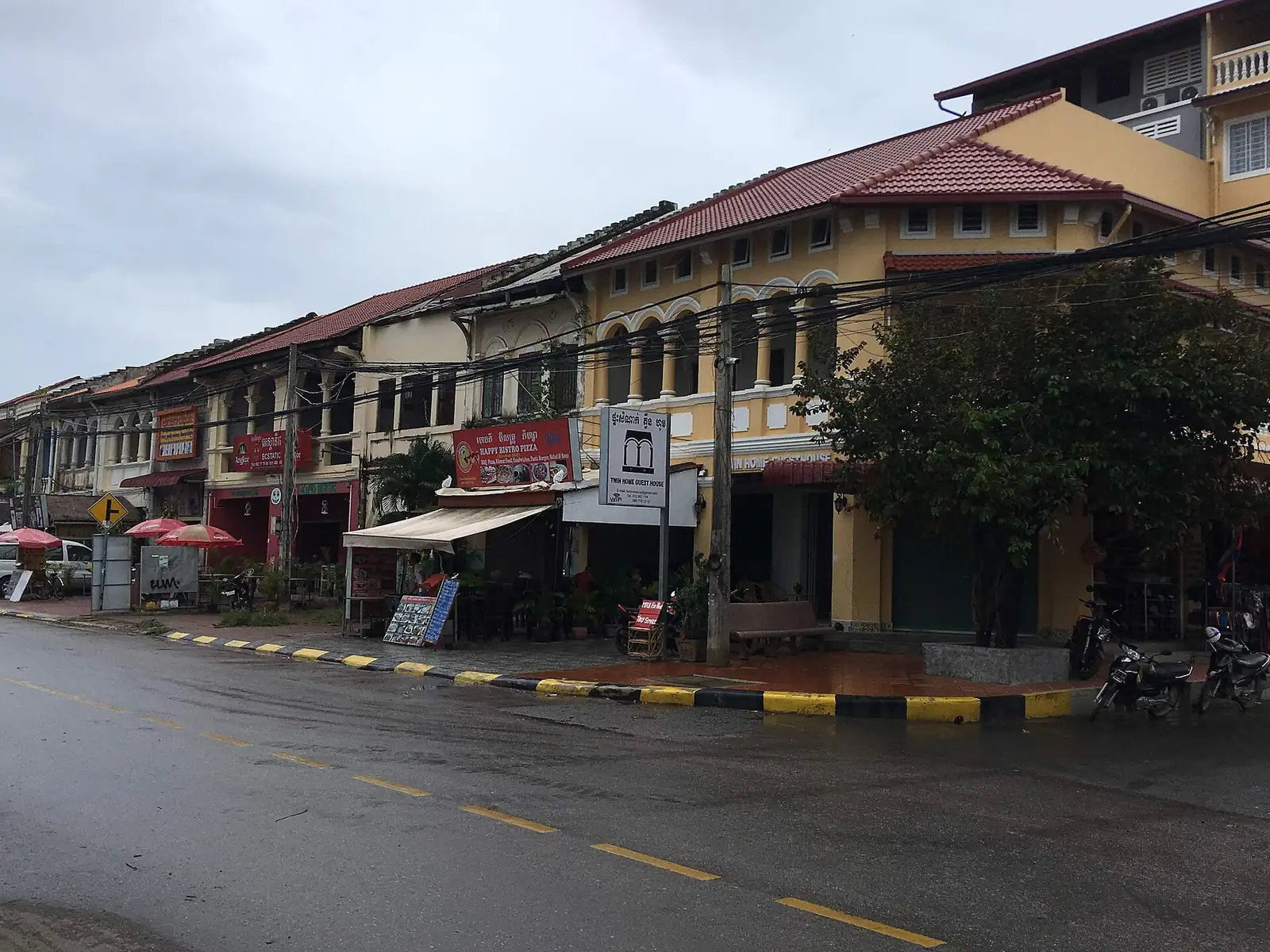 Bokor Night Market
 River Mart
 Lucky Express Supermarket
 Sakura Recycle Shop Japan